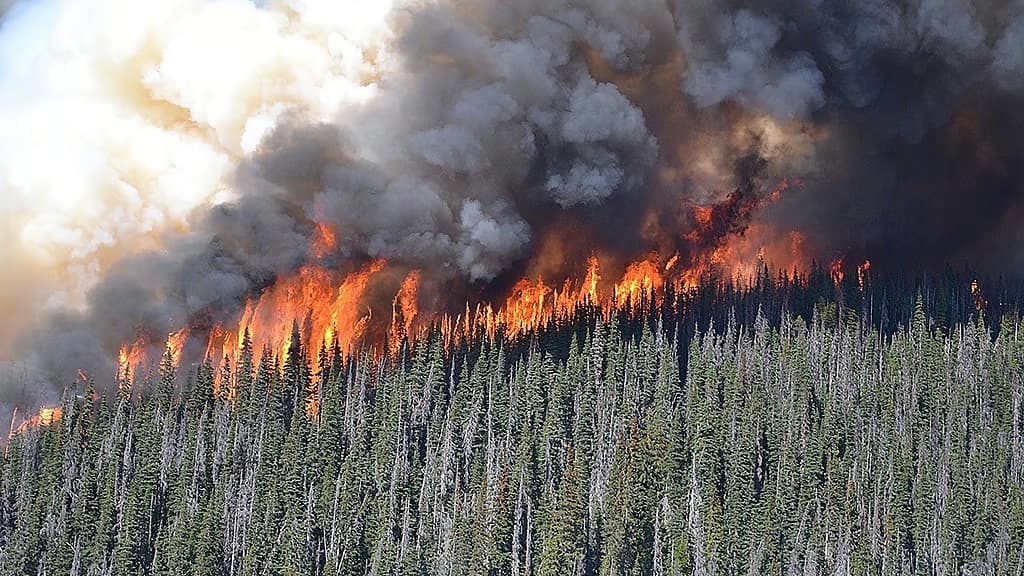
Canada’s insurance industry is urging Ottawa to take direct control of wildfire management, warning that rising disaster costs and what critics describe as a reactive federal response demand a centralized national agency.
Blacklock’s Reporter says in submissions to the House of Commons environment committee, the Insurance Bureau of Canada called on Parliament to create a federal emergency management body similar to the U.S. Federal Emergency Management Agency, arguing current systems are no longer adequate.
“The trend is clear,” the Bureau wrote. “Canada has already entered an era of record-breaking natural disasters with no signs of slowing.”
The proposal would mark a major shift from the current model, where provinces and territories lead wildfire response efforts through mutual aid agreements coordinated by the Canadian Interagency Forest Fire Centre, established in 1982.
Industry representatives say Ottawa must take a stronger leadership role in coordinating disaster preparedness and recovery across the country, as the financial toll continues to climb.
According to the Bureau, annual insured losses from natural catastrophes averaged $478 million between 1983 and 2000. That figure has surged to an average of $2.7 billion between 2011 and 2023, with weather-related disaster costs now reaching the equivalent of 5 to 6% of GDP annually over the past decade.
The push comes as internal federal research suggests Canadians are losing confidence in Ottawa’s wildfire response. A 2025 focus group study commissioned by the Privy Council Office found participants viewed federal action as “mostly reactive,” particularly when relying on deployments by the Canadian Armed Forces.
Respondents said the federal government should play a more proactive role, including establishing a national wildfire prevention task force, expanding firefighter recruitment and training, and developing the capacity to rapidly deploy crews anywhere in the country.
Insurers are also calling for broader reforms aimed at reducing long-term risk. Wawanesa Mutual Insurance Company urged governments to strengthen building codes to include wind, hail and fire-resistant standards, while The Co-operators Group Limited pressed for a federal ban on new housing construction in high-risk flood plains.
The Co-operators warned that more than 10% of Canadian households are already at high risk of flooding, citing poor land-use decisions and insufficient infrastructure as key factors.
The recommendations signal growing pressure on Ottawa to rethink its role in disaster management as wildfire seasons intensify and the economic costs of extreme weather continue to mount.
https://www.multifamilydive.com/news/mass-timber-apartments-neutral-lumber-tariffs/815337/