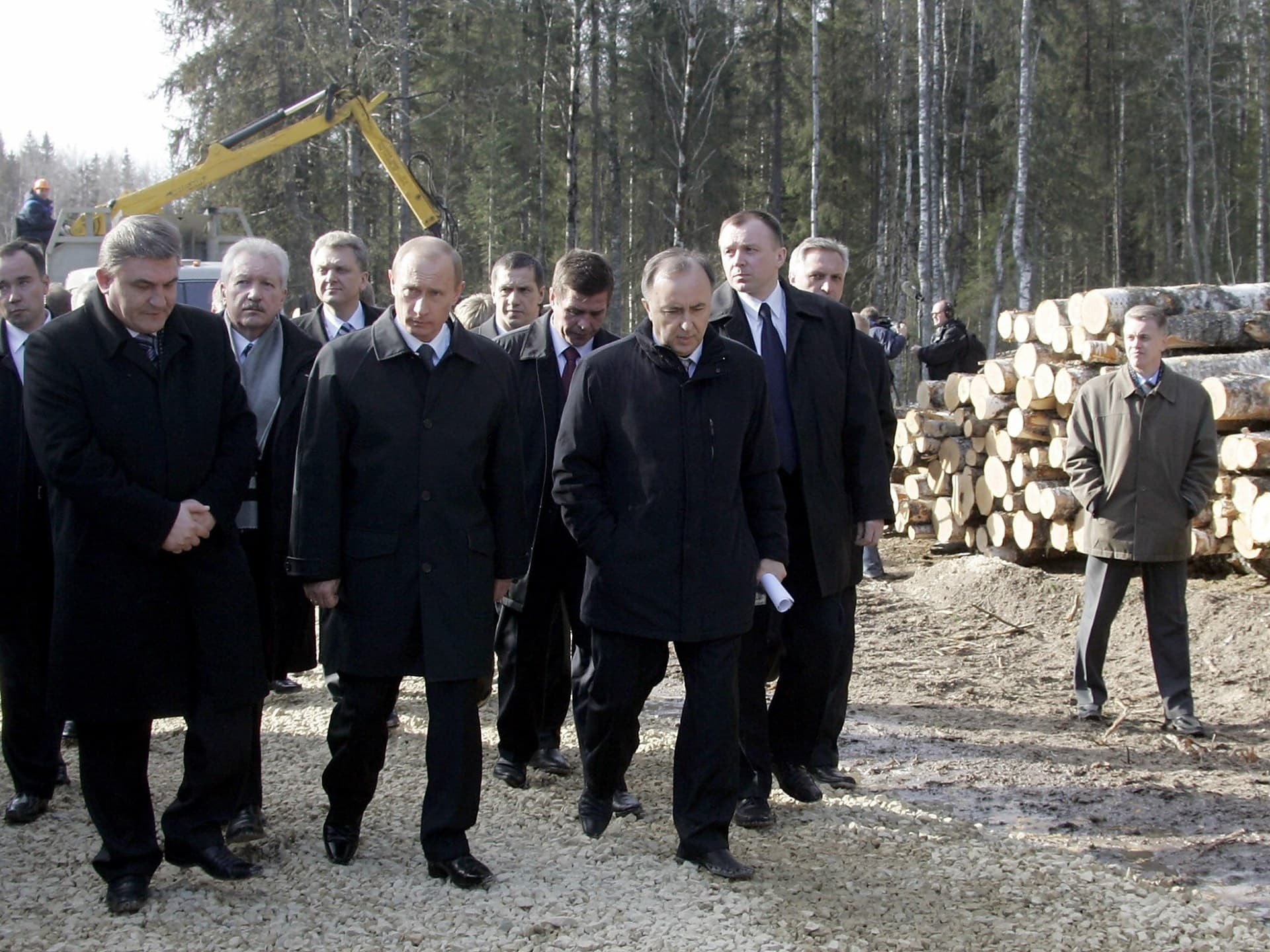
Russian timber and cellulose exports have collapsed by 50 per cent between 2021 and 2025, the steepest fall of any sector tracked by NATO-frontline intelligence across four years of Western sanctions, with the same Latvian assessment revealing that sanctions have cost Moscow more than US$130 billion as it scrambled to source banned goods between 2022 and 2025. That is according to a new analysis published in April by the Constitution Protection Bureau (SAB), one of Latvia’s three security intelligence services, drawing on internal Russian institutional forecasts obtained through intelligence collection alongside SAB’s own assessment.
Wood Central understands Russia was the world’s largest softwood lumber exporter in 2021, ahead of its February 2022 invasion of Ukraine, with its timber and pulp industries deeply integrated into European supply chains before the EU banned Russian timber imports under the fifth sanctions package in April 2022, and FSC and PEFC both suspended Russian certificates from their global certification schemes. The SAB’s 50 per cent figure puts timber and cellulose ahead of iron ore, down 40 per cent, chemical products, down 35 per cent, and ferrous metals, down 20 per cent, over the same window.
[
](data:image/svg+xml;base64,PHN2ZyB4bWxucz0naHR0cDovL3d3dy53My5vcmcvMjAwMC9zdmcnIHZpZXdCb3g9JzAgMCAxMDI0IDc2OCc+PC9zdmc+)
The EU banned Russian timber imports under its fifth sanctions package in April 2022, and FSC and PEFC both suspended Russian certificates from their global certification schemes the same year, sealing Russian fibre out of every major Western market. (Image Credit: Stock Illustration ID: 719426440)
According to the analysis, Russia paid an additional US$32.5 billion each year to acquire sanctioned Western goods through intermediaries at inflated prices, excluding cases where no substitute was available. At the same time, it revealed that Russian institutions are internally forecasting at least an additional US$136 billion in foreign-trade losses by 2030, directly attributable to Western sanctions, within a wider US$175.5 billion projection across all risks tracked.
It comes as a separate internal Russian forecast cited in the report puts energy-sector losses alone at US$216.5 billion over the next five years if Western pressure increases, with the oil and gas industries accounting for roughly 15 to 20 per cent of Russian GDP and nearly a third of federal revenues. SAB notes that the energy figure alone exceeds Russia’s total forecast for foreign trade losses, confirming that the overall projection is conservative.
“SAB assesses these estimates to be an undercount — the losses are likely much higher,” the report said, with the analysis adding that the internal Russian numbers do not account for reduced tax revenues or inflated consumer prices. EU trade refusal alone accounts for US$70 billion of the projected 2030 losses, with extended sanctions and secondary sanctions adding another US$54 billion to the ledger.
SAB also found that Moscow’s so-called “friendly countries” were pulling back from Russian trade, with China, India and Türkiye increasingly reluctant to risk falling under Western secondary sanctions and to avoid a large-scale reorientation of Russian commodity flows. Russia’s own forecasters now privately concede that the timber, cellulose, iron ore and chemical markets will not recover within the next five years, despite Moscow’s public claims of successful market substitution.
[
](data:image/svg+xml;base64,PHN2ZyB4bWxucz0naHR0cDovL3d3dy53My5vcmcvMjAwMC9zdmcnIHZpZXdCb3g9JzAgMCAxMDI0IDc2OCc+PC9zdmc+)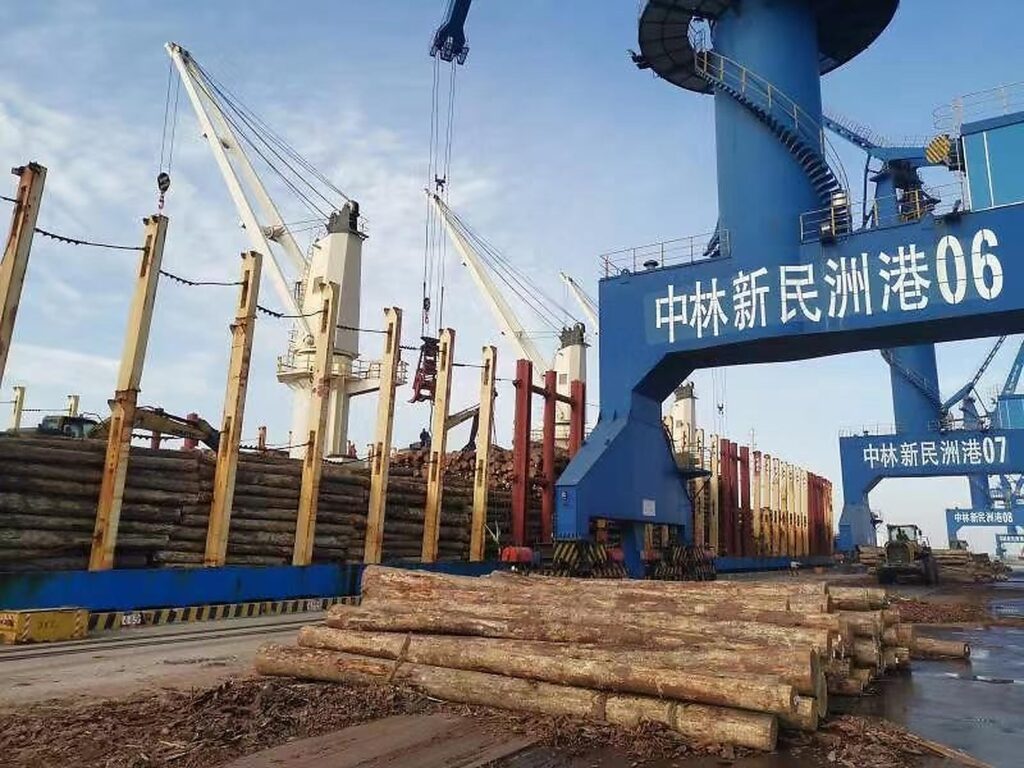
Logs stacked at berths 6 and 7 of Zhonglin Xinminzhou Port in Zhenjiang, one of the China Forestry Group’s main timber import terminals on the Yangtze River. SAB found China, India and Türkiye increasingly reluctant to risk falling under Western secondary sanctions, with Moscow’s pivot to its so-called “friendly countries” stalling as Russian forecasters privately concede the timber and cellulose markets will not recover within the next five years.
It comes as Wood Central reported on the collapse of Russia’s largest forestry holding, Segezha Group, as sanctions have bled the Kremlin-aligned producer dry, leaving it without access to Western pulp, panel and timber markets. SAB chief Egils Zviedris told journalists the dataset was obtained through intelligence collection, with Segezha’s collapse now sitting inside a 50 per cent contraction across Russia’s full forest-products export base.
Russian President Vladimir Putin recently admonished his top economic officials in a rare public rebuke, telling the Cabinet that the national economy had contracted by 1.8 per cent in January and February, contrary to the government’s and the Central Bank’s forecasts. “This is not only below experts and analysts’ expectations,” Putin said, with the figure also missing the Russian Government’s and Central Bank’s own modelling.
With timber and cellulose halved over four years of war, iron ore down 40 per cent, and the energy sector facing US$216.5 billion in projected losses over the next five years, Russia’s industrial base now carries a US$175.5 billion foreign-trade hole by 2030, a figure SAB assesses as a conservative undercount.