The postponement of the tax increase on some finished wood products helps Vietnamese businesses temporarily avoid the policy shock at the beginning of 2026. However, this is not a sign of loosening, but rather a tactical retreat, requiring the wood industry to be more proactive and cautious in policy planning and restructuring the overall development strategy of the entire industry.
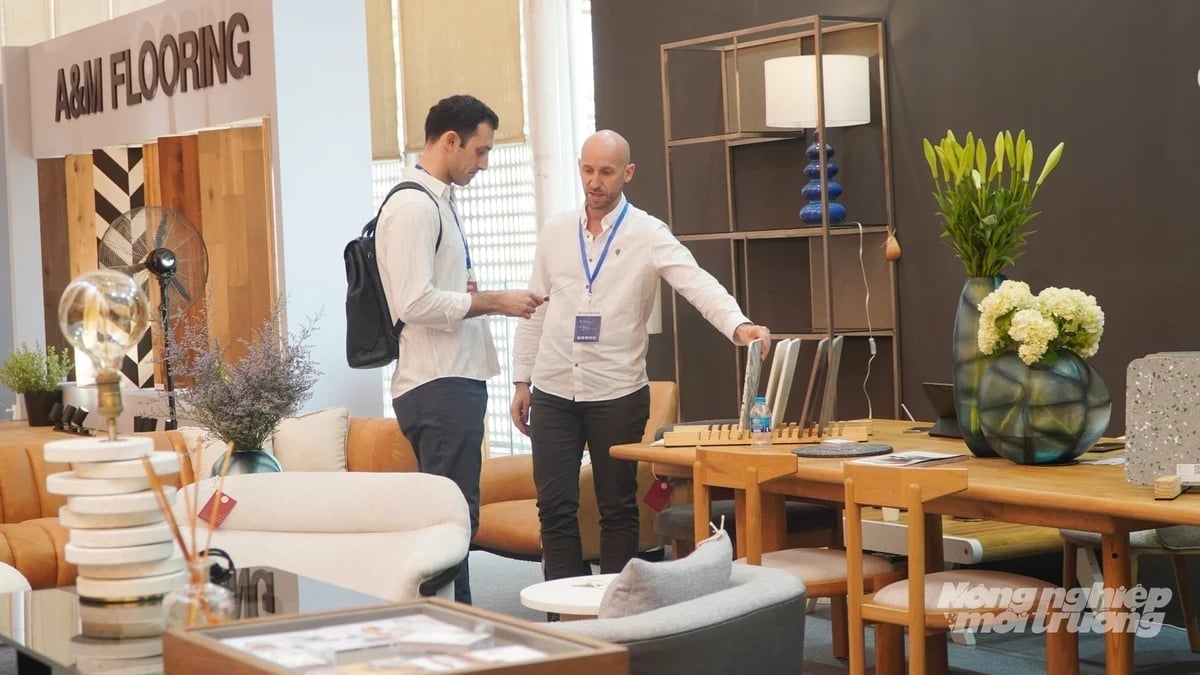
Vietnam’s furniture exports to the United States continue to increase. Photo: Nguyen Thuy.
According to the new decision, the implementation date for higher tariffs on products such as upholstered chairs, kitchen cabinets, and bathroom cabinets has been postponed from January 1, 2026, to January 1, 2027. During this period, the current tariffs under Section 232 of the Trade Expansion Act of 1962 will remain in place, including 10% for raw timber and 25% for processed products.
The US side stated that the adjustment in the timing of the tariff increase was intended to create room for trade negotiations and ensure supply chain stability. However, it should be clarified that this is not a postponement of the tariff imposition, but only a postponement of the tariff increase. Imported wood products into the US are still subject to tariffs under Section 232, and this policy is entirely independent of any judicial rulings related to the reciprocal tariff order under the IEEPA.
According to the Department of Foreign Market Development ( Ministry of Industry and Trade ), the current 25% tariff is already a high threshold for many Vietnamese wood businesses. Postponing the tariff increase only helps avoid a shock at the beginning of 2026, but does not open up new growth opportunities.
Mr. Ngo Sy Hoai, Vice President of the Vietnam Wood and Forest Products Association (VIFOREST), commented that if postponing the tariff increase is considered an “opportunity,” then extreme caution is needed. In reality, tariff pressure has spread throughout the entire supply chain, from domestic manufacturers to importers and retail systems in the US.
According to VIFOREST’s assessment, the likelihood of the US raising tariffs to 50% in the short term is low because the increased costs are unlikely to be fully absorbed. Ultimately, the majority of the burden will shift to American consumers through new price levels, given that demand is not yet truly stable.
However, in the medium term, risks remain as the United States continues to expand its investigations and apply Section 232 to many other categories of imported goods. The trend of using tariffs as a tool to regulate supply chains and in economic and political negotiations is likely to continue.
Proactively move up the value chain.
In this context, the strategic question is no longer whether taxes will increase, but how businesses will use this one-year grace period to restructure their business models.
According to Mr. Ngo Sy Hoai, the US market still plays a crucial role, and withdrawal is almost impossible. However, the principle of “not putting all your eggs in one basket” is being applied more clearly, as businesses proactively diversify risks across other markets and adjust their product strategies.
Sao Nam Trading and Manufacturing Co., Ltd. is a prime example of a cautious approach. Instead of aggressively expanding investment, the company focused on restructuring its product portfolio, moving towards thinner, more affordable flooring options while maintaining the same quality.
According to Ms. Do Thi Kim Loan, General Director of the company, reducing the thickness from 21 mm to 17 mm, 15 mm, even 12 mm and 9 mm is not just a technical adjustment, but a way to optimize raw material costs, logistics, and expand the customer base. This approach helps the business preserve cash flow and maintain orders in a context where profit margins are shrinking due to taxes and input costs.
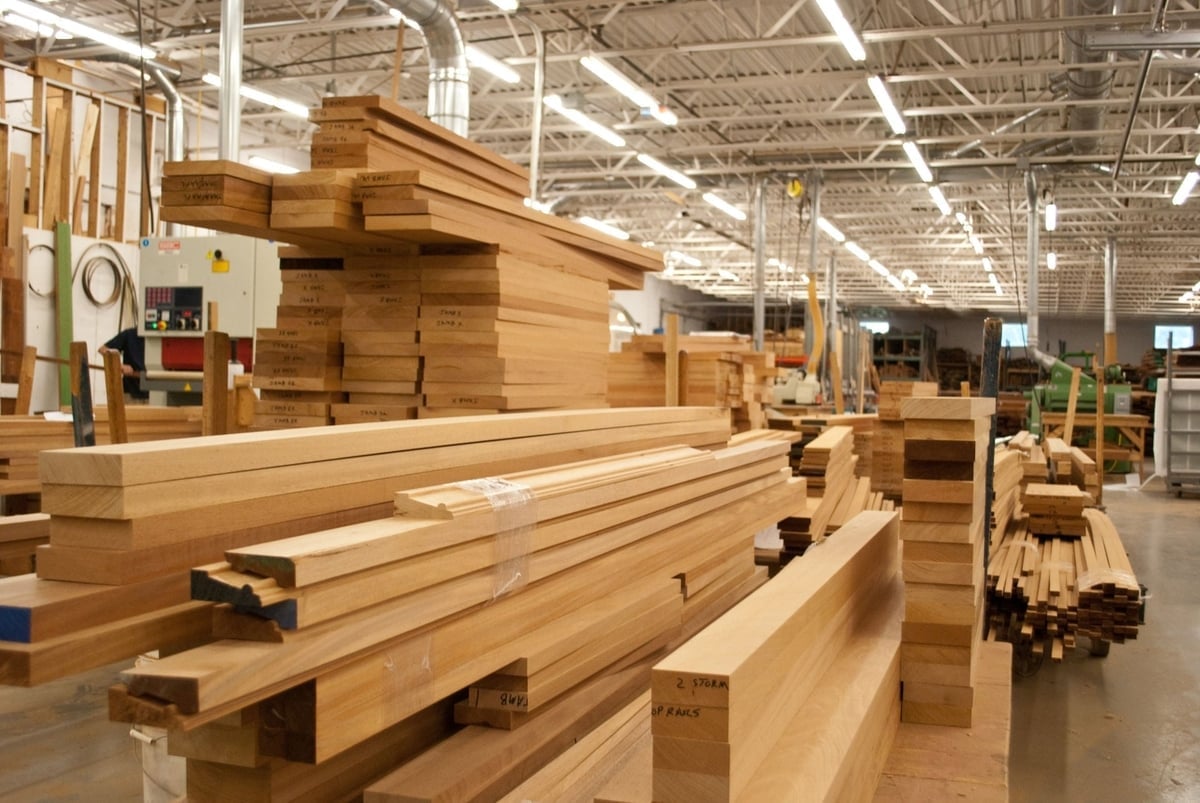
Postponing the increase in timber taxes helps Vietnamese businesses avoid a shock at the beginning of 2026, but policy risks remain, requiring the timber industry to be proactive. Photo: Minh Chau.
While Sao Nam opted for a “smart downsizing” strategy, Nghia Son Wood Furniture Co., Ltd. expanded its business space through design and e-commerce.
According to Mr. Huynh Le Dai Thang, Director of the company, participating in international e-commerce platforms, especially Amazon, is not just a choice of sales channel but a strategic shift. By directly reaching end consumers, businesses regain control over pricing, market share, and customer data.
The effectiveness is evident as revenue from e-commerce channels has quadrupled over the past year, now accounting for approximately 15% of total export revenue. Simultaneously, Nghia Son has invested systematically in design, launching around 30 new models each year, focusing on indoor and outdoor furniture lines – a high-value segment with good profit margins.
According to Mr. Thang, the difference between pure outsourcing and custom-designed manufacturing lies in pricing power. When proactively designing, the selling price is established based on usability and experience, creating a sufficiently large “buffer” to absorb increased tax costs. Thanks to this, in 2025, even with a sharp increase in import taxes into the US at times, Nghia Son still achieved over 40% growth in revenue and production volume, exporting over 1,000 containers and securing orders until May 2026.
From an overall perspective, Mr. Nguyen Chanh Phuong, Vice Chairman of the Ho Chi Minh City Handicraft and Wood Processing Association (HAWA), believes that while 2026 presents many challenges, the outlook is not yet pessimistic. The Vietnamese wood industry possesses irreplaceable core competencies with approximately 600,000 workers, a relatively complete production ecosystem, and experience accumulated through many cycles of change.
However, this advantage is only enough to maintain stability, not to guarantee sustainable growth. In the context of a fragmented global trade, businesses are forced to delve deeper into high-value-added stages such as design, branding, and cross-border e-commerce.
In the long term, the timber industry needs to develop leading enterprises in international distribution and e-commerce, acting as “driving forces,” while manufacturers focus on their core competencies. The current policy setback is therefore not only an opportunity to adapt, but also a test of the industry’s ability to transform in the post-tariff era.