Philomath, Ore. (InvestigateTV) —A shuttered sawmill that left more than 100 people without jobs has found a new life as a mass timber manufacturing facility, offering hope to a rural community.
The U.S. Forest Service says many of the millions of acres of American forests are overcrowded with smaller trees, increasing wildfire risk, and recommends tree-thinning projects that support rural economies.
In Oregon, about 50% of the state is covered in forests, and timber forms part of many small communities’ economic identity.
In 2024, the Interfor mill in Philomath, Oregon, closed, eliminating the only mill within city limits in the town of just under 6,000 people.
Six months later, the Portland-based company Timberlab purchased the facility to manufacture mass timber products.
“When that Timberlab news came in, I think there was a sort of breath of new life, like, ‘Oh, wow, OK, this isn’t over yet,’” Christopher McMorran, Philomath’s mayor, said.
New technology transforms timber industry
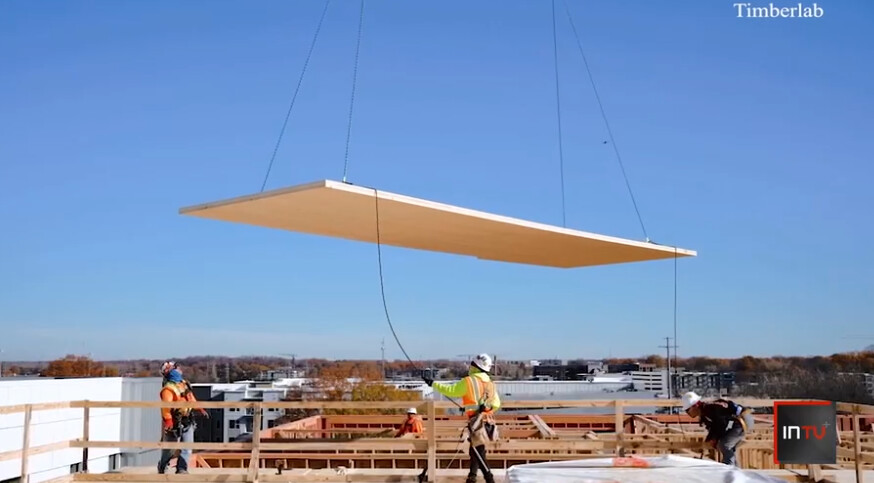
Mass timber manufacturing represents a shift from traditional lumber production to high-tech wood products that can replace concrete and steel in large buildings. The process uses smaller pieces of wood laminated together rather than large trees, addressing both forest management needs and construction industry demands.
“Back in the day, you were using large trees to make the columns and beams for these structures. And today, with advances in technology, you can use small pieces of wood, 2-by-4s, 2-by-6s, 2-by-8s, laminated together,” Chris Evans, Timberlab’s CEO, said.
The manufacturing process allows buildings to be constructed faster with less waste because much of the work is completed in the factory before installation.
Mass timber can cut carbon pollution in half compared to concrete or steel and stores carbon for decades, according to manufacturers.
Community impact
The closure hit hard in a community where many families have worked in timber for generations.
Hunter Pedder, a 19-year-old log truck driver, said his grandfather and father both worked in the industry.
“The mill is a heart of the town. After it shut down, a lot of people just didn’t have jobs,” Pedder said.
Timberlab plans to double its headcount over the next five years and is opening new facilities across Oregon.
While the exact number of returning jobs remains unclear, local officials are optimistic about the model’s potential.
“Even if we only get 50 jobs back or 70 jobs back, that’s 50 to 70 more jobs than we thought we’d get back,” McMorran said.
The Philomath facility represents how communities can balance tradition and innovation as the timber industry evolves to meet environmental and economic challenges.
“We don’t have to choose between this kind of heritage and innovation in the future. We can innovate and use that heritage that built Philomath at the same time,” McMorran said.
Timberlab said its mass timber products are designed for safety, with thick wood panels that char on the outside but maintain strength inside, often performing better in fire tests than steel.
Experts note that while mass timber can dry more slowly than conventional lumber, potentially increasing risk of insects and mold, proper moisture treatments can mitigate these issues.