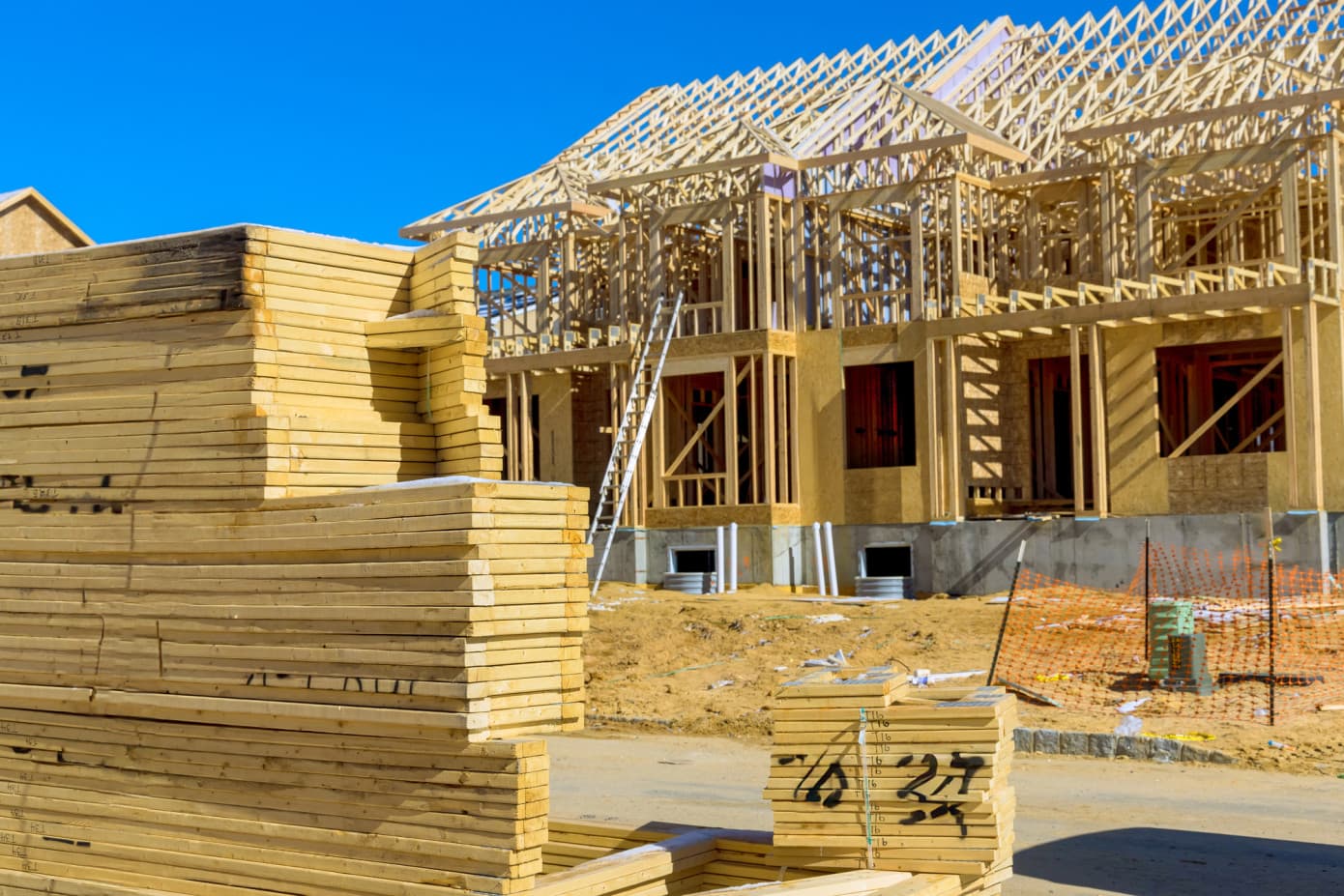
U.S. softwood lumber demand moves more with residential construction than with GDP per capita or lumber prices when housing starts are included directly in the demand equation, a new study finds. Using quarterly U.S. data from 2000 to 2024, the study estimates a housing-starts elasticity of 0.593 for apparent softwood lumber consumption, compared with an income elasticity of 0.138 and a price elasticity of -0.212, then applies those elasticities in a forest-sector model to project outcomes through 2070 under five scenarios. This is reported in a study conducted by Craig Johnston, an independent researcher in Ottawa, Jinggang Guo of Louisiana State University’s Department of Agricultural and Agribusiness, and Jeffrey P. Prestemon of the U.S. Forest Service Southern Research Station.
The housing data used in the study show U.S. total housing starts (single-family plus multifamily) averaged 1,305.8 thousand units (seasonally adjusted annual rate) over 2000–2024, with the quarterly sample ranging from a maximum of 2,120 thousand to a minimum of 526 thousand. The study also describes a cycle in which starts peaked above 2.0 million units in 2005 before falling to about 0.54 million units in 2010.
The authors incorporate housing starts into the Forest Resource Outlook Model by adding housing activity alongside GDP per capita growth and price changes in the model’s demand updating equation. They say the older model setup, which relies on GDP per capita and prices without housing starts, projects rising U.S. consumption after 2015, while the revised setup produces demand that falls gradually and aligns more closely with FAOSTAT observations in the most recent decade.
U.S. softwood lumber demand to decline through 2070 as residential starts fall